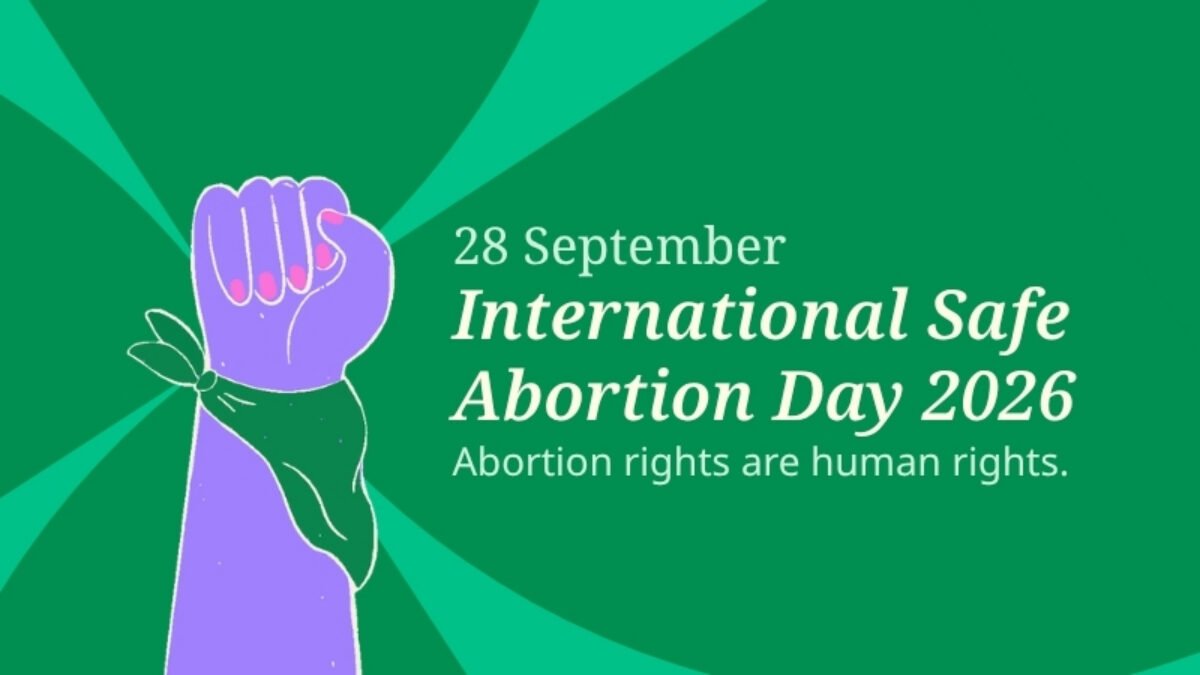
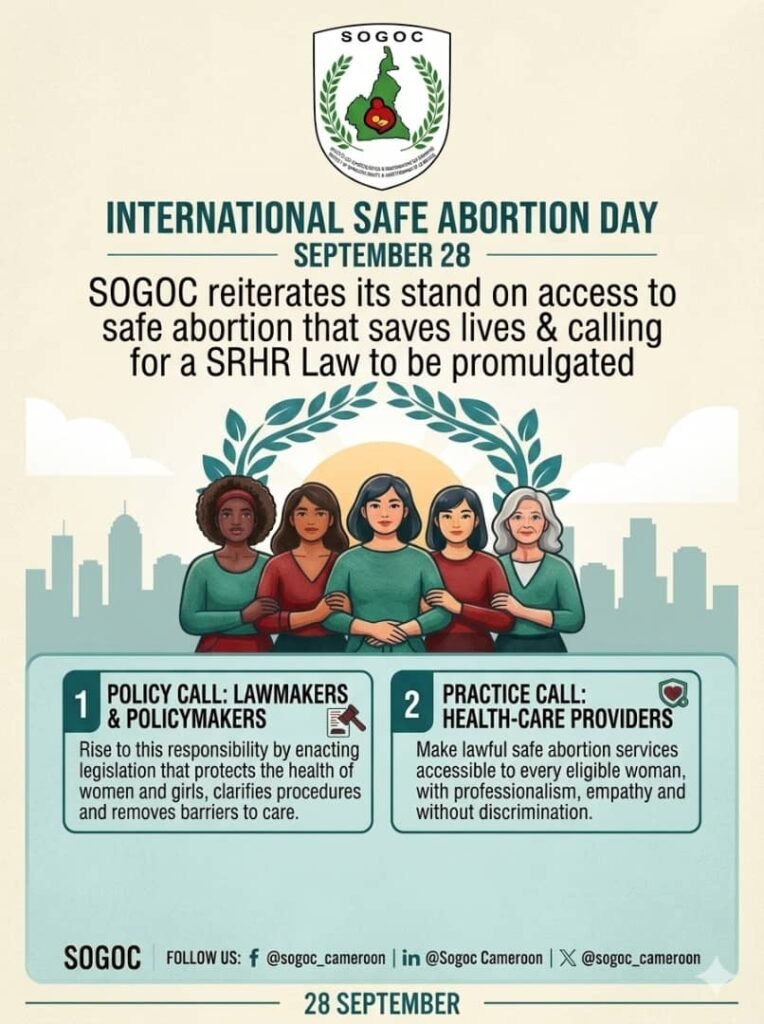
The Society of Gynaecologists and Obstetricians of Cameroon (SOGOC) has once again called for access to safe, legal and comprehensive abortion care in the country as the world marks International Safe Abortion Day 2026.
Commemorated every September 28, International Safe Abortion Day is a global call to action for access to timely, affordable and quality abortion care. It also highlights the harms caused by restrictive abortion laws and barriers to care, while urging decision-makers to protect and advance reproductive rights as human rights.
In what it describes as a “solemn appeal on behalf of the women and girls who suffer in silence” in the country, SOGOC says restrictive abortion laws do not reduce the number of abortions, but instead force individuals into dangerous and unsafe procedures that account for tens of thousands of preventable maternal deaths annually.

Abortion is generally illegal under Cameroonian law. However, the Cameroon Penal Code legally permits abortion in two specific circumstances: when the life of the pregnant woman is in grave danger and when the pregnancy resulted from rape, under Article 339 of the Penal Code. A woman in such a situation should be able to visit a health facility and be guided, with dignity, through the steps prescribed by law.
Despite these exceptions, SOGOC says abortion remains restricted in Cameroon, citing Articles 337 and 338 of the Penal Code, which criminalise any woman who procures her own abortion or consents to it, as well as any person who performs the procedure.
According to SOGOC, restricting abortion does not reduce how often it occurs, but instead makes it more dangerous, with a grave human cost. Citing a 2019 study, SOGOC says unsafe abortion is estimated to account for 25 percent of maternal deaths in Cameroon.
“Behind this figure are mothers, daughters and sisters lost to haemorrhage and infection, or left with infertility, stigma and the fear of prosecution,” the organisation said in its statement.
SOGOC notes that safe abortion is one component of sexual and reproductive health and rights (SRHR), yet Cameroon still has no dedicated legal framework on SRHR. It says the gap leaves providers uncertain and women without clear pathways to the care the law already allows.
In its statement, SOGOC called for the promulgation of a comprehensive SRHR law, urging lawmakers and policymakers to rise to this responsibility by enacting legislation that protects the health of women and girls, clarifies procedures and removes barriers to care.
The organisation has also “respectfully but firmly” called on healthcare providers to make lawful safe abortion services accessible to every eligible woman, with professionalism, empathy and without discrimination, stressing that “no woman or girl should lose her life for want of safe, lawful care”.