The National Blood Transfusion Service (NBTS) of Cameroon has raised concerns over the country’s persistent blood shortage, revealing that it collected less than half of its annual blood requirement in 2025.
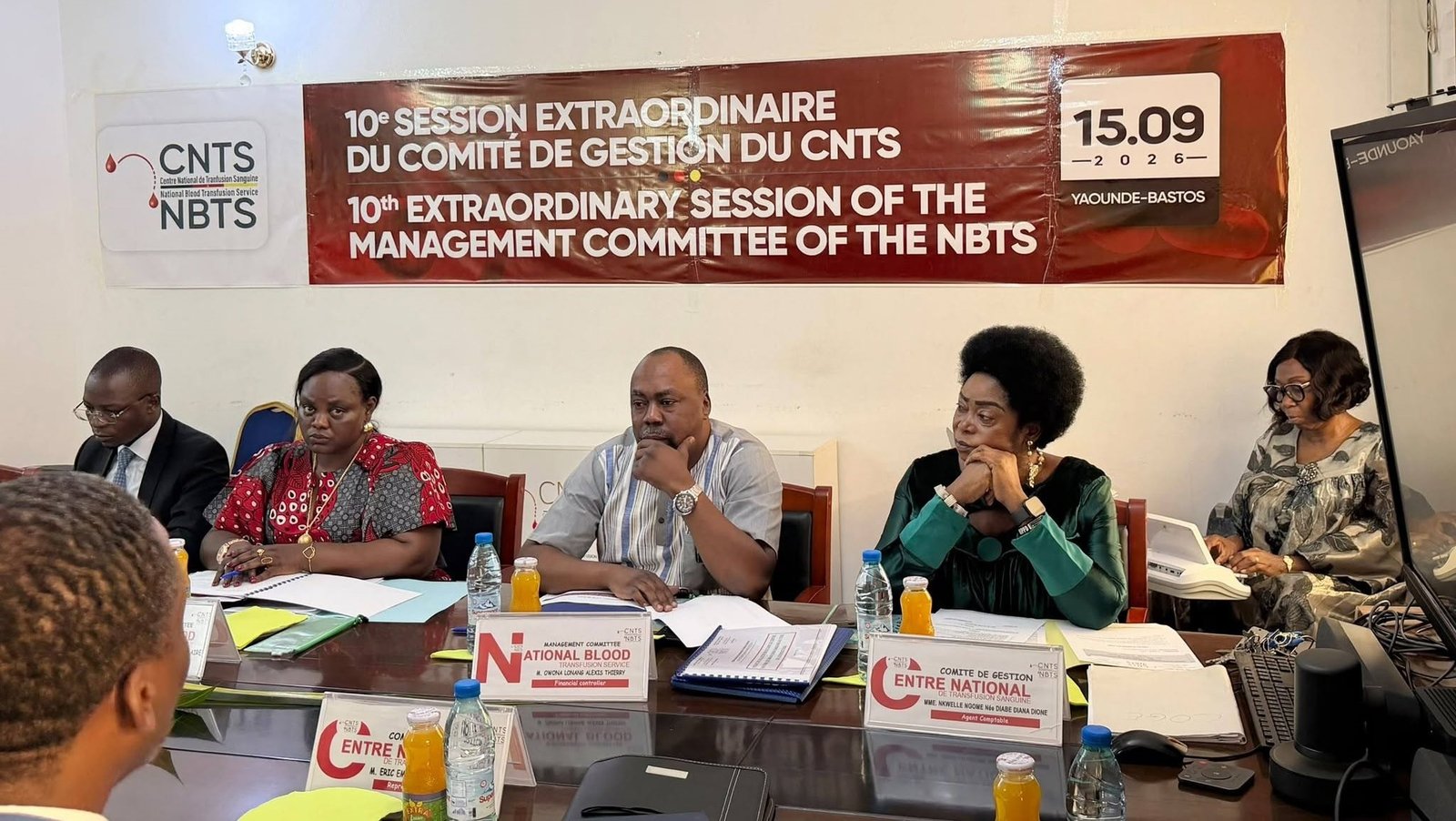
During the 10th Extraordinary Session of the Management Committee of NBTS in Yaounde on Tuesday, September 15, 2026, it was disclosed that the institution collected just about 187,000 pints of blood out of the 400,000 pints needed annually last year.
The figure represents just 47 percent of the country’s estimated blood needs, highlighting the challenges confronting efforts to ensure adequate and reliable supplies for patients in health facilities across the country.

NBTS Director General, Professor Dora Ngum Shu Mbanya, attributed the shortfall largely to inadequate human and material resources, while calling for greater public participation in voluntary blood donation.
“We need good infrastructure. We need resources. We need all sorts of things, but importantly, we also need the population to collaborate by donating blood,” Professor Mbanya said.
She stressed that blood donation remains critical to saving lives and improving the availability of blood products in the country.
According to the NBTS Director General, support from government institutions and development partners has helped the service continue implementing its mandate despite the challenges.

“By God’s grace, we have had the Ministries of Finance and Economy and our tutelle technique, the Minister of Public Health, and they have added our subvention,” she said, stressing the importance of the Management Committee session for the institution’s financial operations.
The September 15 session was chaired by the President of the NBTS Management Committee, Professor Tetanye Ekoe.
Beyond the blood shortage, the meeting focused on aligning the Service’s financial resources with its evolving operational needs and strategic priorities.
Professor Tetanye Ekoe underscored the need for the revised budget to be guided by “sincerity, regularity and overall coherence” to ensure that available resources are effectively deployed.
According to the NBTS, the budget review comes as the institution pursues a broader transformation aimed at improving the availability and quality of blood products and strengthening its capacity to fulfil its mandate nationwide.
As part of its long-term objectives, the NBTS is targeting coverage of 90 percent of Cameroon’s blood needs by 2030, alongside the recruitment of about 120,000 new blood donors.
Achieving the target will require increased investment in infrastructure, human resources and blood collection equipment, as well as sustained public awareness and voluntary blood donation campaigns.