Violence against women remains widespread in Cameroon despite government commitments to significantly reduce it, according to a new report by Human Rights Watch (HRW).
Cameroon had set a target of halving violence against women by 2026, but progress toward the goal remains limited, HRW said in a report released on June 24.
Titled “I Live in Constant Peril,” the report argues that the government has failed to take adequate measures to protect women from domestic violence, most of which occurs within the home and is often perpetrated by husbands, partners, or male relatives. The rights group said repeated government promises since 2011 have not translated into meaningful protection for victims.

The report is based on interviews conducted between September and December 2024 with 60 women in Maroua, Douala, and Buea who had experienced physical, psychological, or economic abuse. Researchers also interviewed government officials responsible for social services and religious leaders.
According to officially recorded government figures, 67 women were killed by intimate partners in 2024. HRW believes however that the actual number is likely much higher because many cases go unreported.
Juliana Nnoko-Mewanu, Senior Advisor and Associate Director in HRW’s Women’s Rights Division, attributed the persistence of violence partly to harmful social norms that normalize male authority.
“Structural discrimination is endemic in Cameroon,” she said, arguing that the country lacks an effective legal framework to protect women. She added that victims often have few alternatives because the Ministries of Women’s Empowerment and the Family and Social Affairs lack adequate resources. Women who seek help from the police or courts frequently encounter dismissive attitudes and pressure to reconcile with their abusers, she said.
The report highlights the experiences of several women, including Agnes M., a 47-year-old mother of four in Buea, who said her partner repeatedly took her earnings, pressured her into taking loans he failed to repay, and left her burdened with debt. Another survivor, Mavel M., a 40-year-old mother of three, described enduring similar economic abuse during a relationship that lasted more than 12 years before she eventually left.
The government had not officially responded to the report at the time of publication. However, HRW cited government officials who acknowledged that the problem is not only severe but worsening.
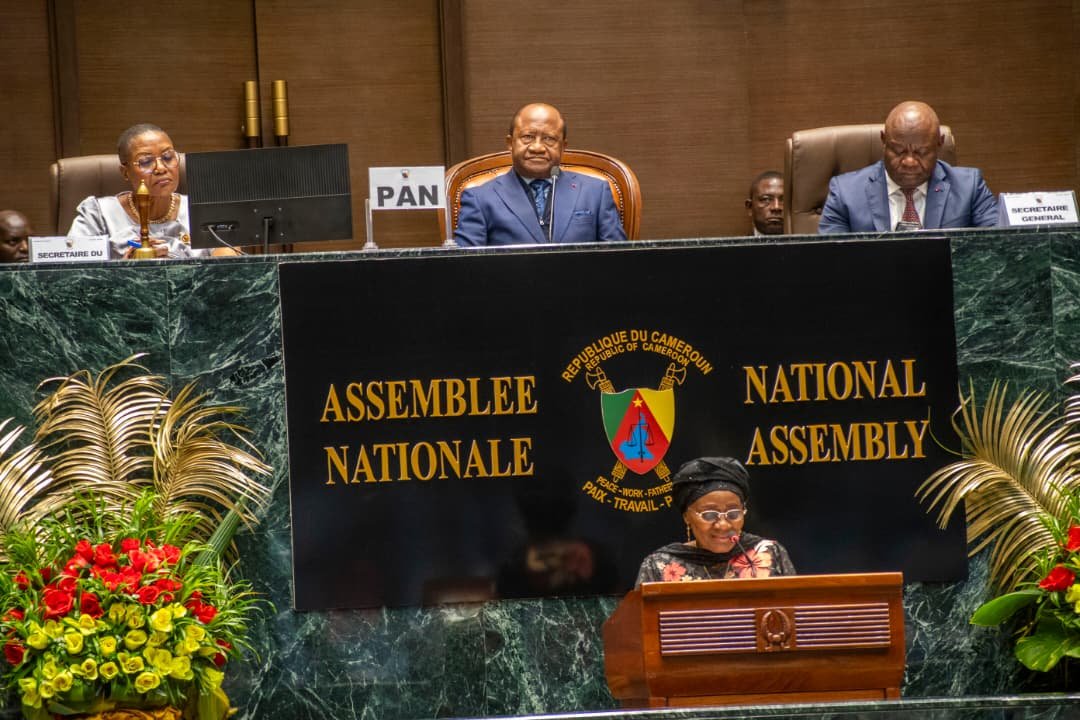
Last week, the Minister of Women’s Empowerment and the Family, Prof. Marie Thérèse Abena Ondoa, told Parliament that 1,599 cases of gender-based violence were recorded between January and April 2026. She acknowledged that, despite efforts by the government and development partners, the problem remains difficult to contain.
HRW warned that failure to act urgently would not only mean missing government commitments but would also entrench cycles of violence and economic vulnerability across generations.
The organization called on the government to reform discriminatory laws, adopt and implement a comprehensive Family Code, establish a coordinated national response to domestic violence, and expand access to support services for survivors nationwide.