About 100 pints of blood have been added to Cameroon’s national blood bank as health authorities continue efforts to meet the country’s growing demand for blood and address critical shortages affecting patients nationwide.
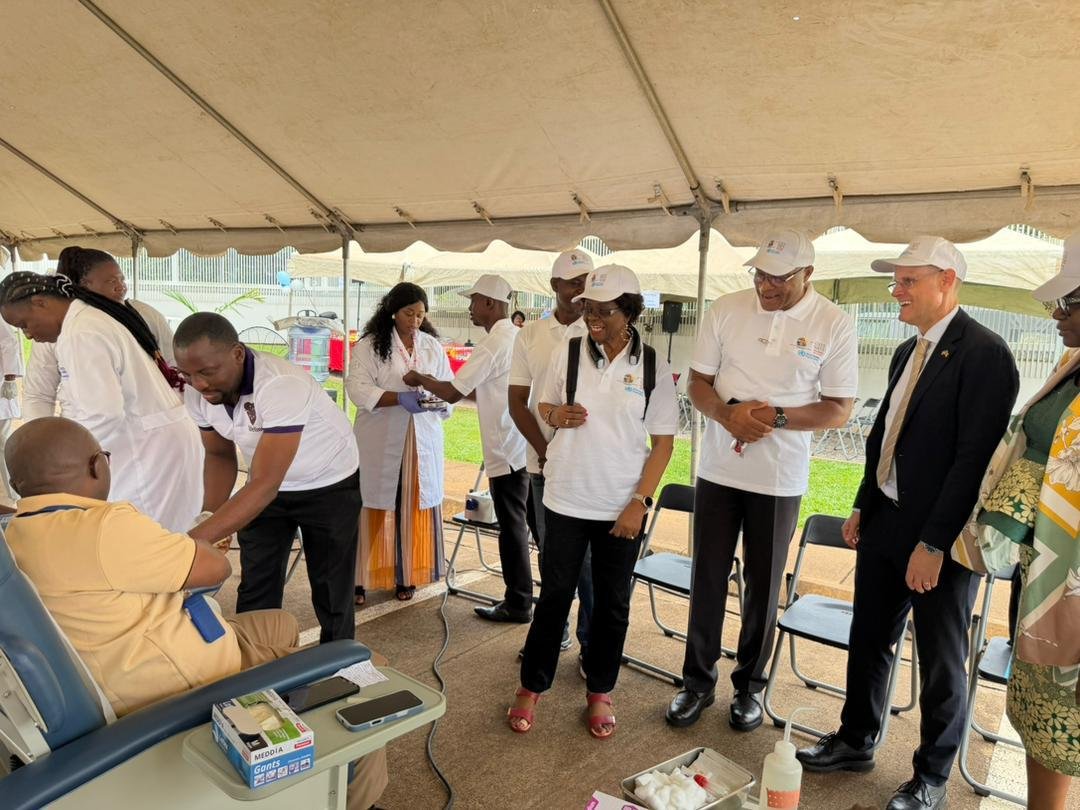
The latest contribution came through a public voluntary blood donation campaign organised by the U.S. Embassy in Yaounde in collaboration with the National Blood Transfusion Service (NBTS) on Wednesday, June 10. The initiative formed part of activities marking the 2026 edition of World Blood Donor Day, celebrated annually on June 14.
Leading the campaign at the U.S. Embassy Visitor Parking Lot was the diplomatic institution’s Chargé d’Affaires ad interim, John Robinson, who described voluntary blood donation as “a life-saving act” and encouraged Cameroonians to embrace the gesture of solidarity.

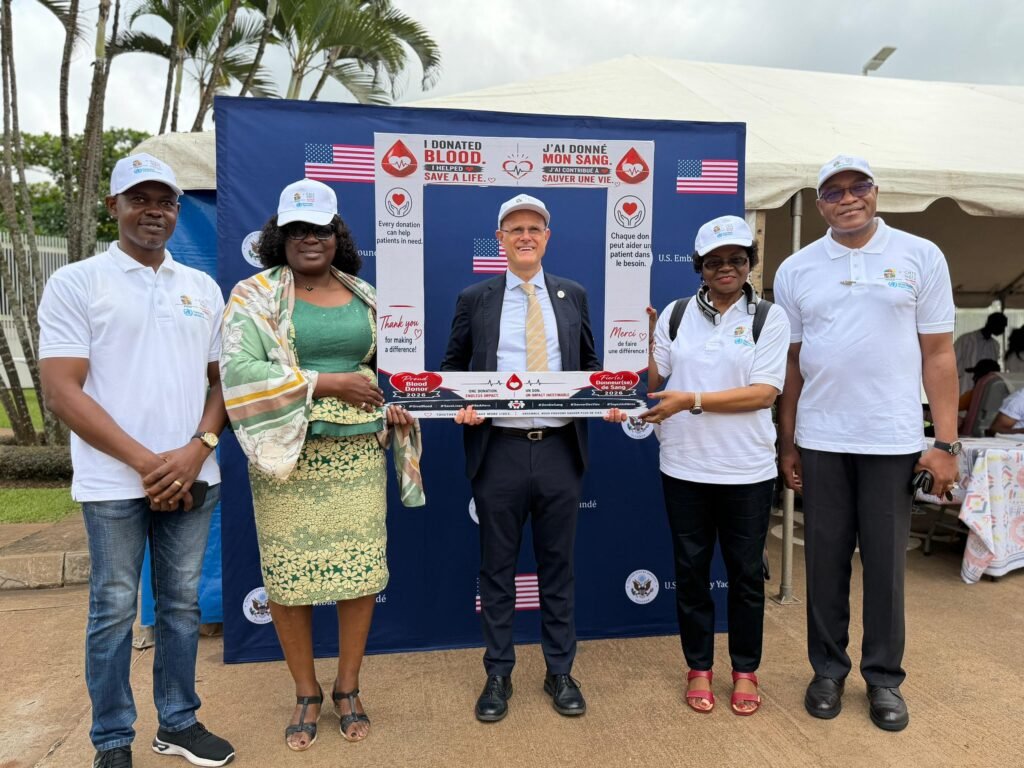
The General Manager of the NBTS, Prof. Dora Mbanya, praised the initiative, now in its third edition, and called on other institutions to emulate the U.S. Embassy’s example by becoming ambassadors for voluntary blood donation.
Members of the public joined U.S. Embassy staff in the nearly seven-hour donation exercise, which yielded approximately 100 pints of blood, according to the NBTS.
This year’s World Blood Donor Day will be observed under the theme, “One Drop of Humanity. Give Blood. Save Lives.” According to Prof. Mbanya, the theme serves as a reminder that blood donation is far more than a medical act; it is an expression of humanity and solidarity.
Data from the NBTS indicate that Cameroon has made steady progress in blood collection over the past three years, with collections rising from 147,034 units in 2022 to 158,481 units in 2023, 165,708 units in 2024, and 186,500 units in 2025.
Speaking during a press briefing in Yaounde on June 1 to launch activities marking World Blood Donor Day, Prof. Mbanya said the figures represent the strongest annual increase recorded during the period under review.
As a result, national blood coverage improved from approximately 37 percent in 2022 to nearly 47 percent in 2025. While describing the progress as encouraging, she noted that it also underscores the magnitude of the challenge that remains.
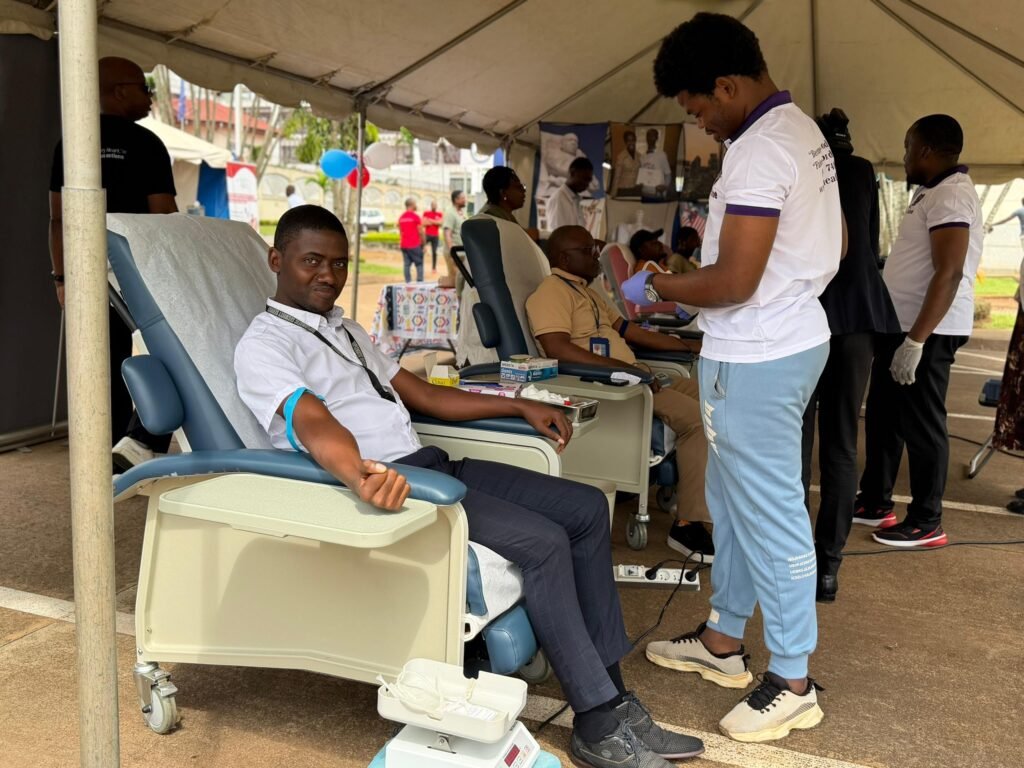
Despite sustained mobilisation efforts by the NBTS and its partners, Cameroon currently meets less than half of its estimated annual requirement of 400,000 units of blood, leaving many health facilities facing persistent shortages.
“This reality explains why the NBTS continues to intensify its efforts in awareness creation, donor mobilisation, technical strengthening and territorial deployment,” Prof. Mbanya said.
She added that the significant improvement in blood coverage over the past three years demonstrates that the NBTS strategy is yielding measurable results, while stressing the need for greater public participation to help bridge the existing gap between supply and demand.