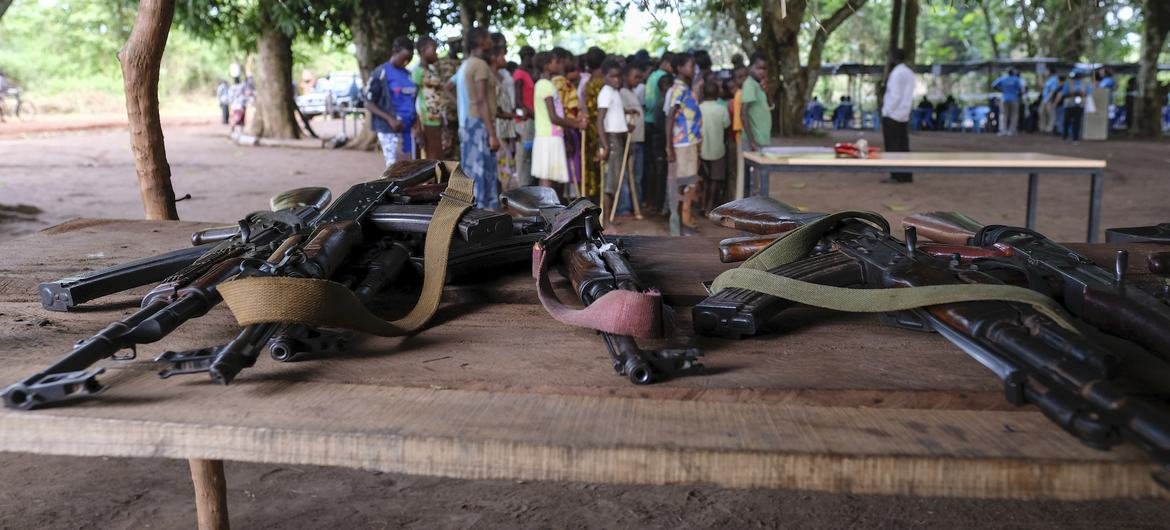
Cameroon is estimated to have between 150,000 and 185,000 illegal weapons in circulation, a situation authorities say underscores the urgent need to strengthen arms control amid ongoing conflicts in parts of the country.
The disclosure was made by the Executive Director of the Cameroon Youth and Students Forum for Peace (CAMYOSFOP), Ngalim Eugine Nyuydine, during a Policy Conference on Weapons and Ammunition Management in the context of the Disarmament, Demobilization and Reintegration (DDR) programme in the country.
The conference, chaired by the Secretary General of the Ministry of External Relations, Chinmoum Oumarou, on behalf of Minister Lejeune Mbella Mbella, was held at the Institute of International Relations of Cameroon (IRIC) on Friday, July 3. It marked the conclusion of a five-day integrated training workshop on weapons and ammunition management in conflict situations.

The event brought together representatives from the Ministry of External Relations, the United Nations Regional Centre for Peace and Disarmament in Africa (UNREC), the National Disarmament, Demobilization and Reintegration Committee (NDDRC), CAMYOSFOP, development partners, and civil society organisations.
Participants exchanged national and international experiences, shared best practices, examined persistent challenges, and proposed recommendations to strengthen the governance of conventional arms and ammunition in Cameroon.
Speaking at the ceremony, Chinmoum Oumarou praised the work of the NDDRC in facilitating the reintegration of thousands of former combatants into society.
“The current security environment, marked by evolving transnational threats, organised crime, terrorism and the illicit circulation of arms, reminds us that the safe and secure management of conventional arms and ammunition remains a major priority for safeguarding the stability of our country,” Oumarou said.
He added that ending the five-day training workshop with a policy conference would further strengthen the capacities of NDDRC members and other national stakeholders involved in arms and ammunition management.
The National Coordinator of the NDDRC, Fai Yengo Francis, the DDR centres in Bamenda, Buea and Maroua host a total of 3,772 ex-combatants. While acknowledging that significant progress has been made, he said disarmament remains a complex and demanding process.
He highlighted a major milestone achieved in December 2024, when the committee conducted its first large-scale formal reintegration exercise in the Far North Region.
“The operation enabled the official reintegration of 708 ex-combatants, including a significant number of children formerly associated with armed groups and many women,” he said.
According to Fai Yengo, the exercise demonstrates that sustained efforts in disarmament, demobilisation and psychosocial support are yielding “tangible, measurable and sustainable results.”
With illicit arms continuing to fuel insecurity, participants agreed that strengthening weapons and ammunition management is essential to consolidating peace, supporting the DDR process, and enhancing national security.