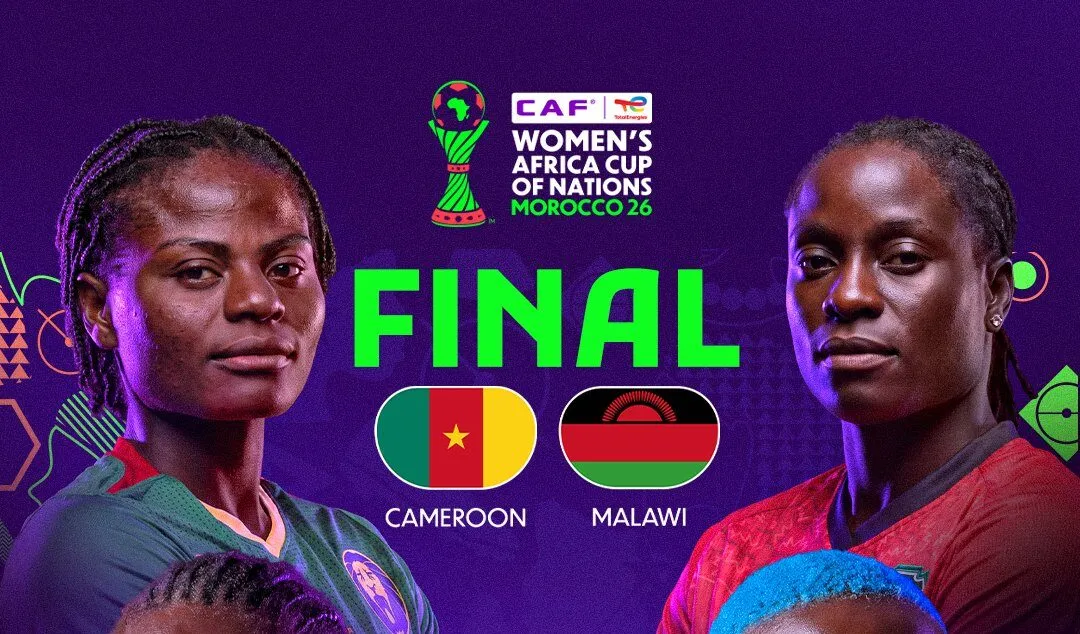
What happens when the final whistle signals the beginning of another game—a game whose lineups are unknown to the teams?
In 2017, President Paul Biya, speaking before millions of eyes and ears, made a statement that captured years of turbulence, despair and pain in Cameroonian football.
The Indomitable Lions had just won the Africa Cup of Nations after beating Egypt, one of the two nations whose five AFCON titles they so proudly boast about today. I will reserve Nigeria for another line!

Before the tournament, the Lions and their Belgian coach, Hugo Broos, were hardly considered worthy of a seat at the AFCON table.
Broos was not a big name in football. Cameroon, by contrast, could boast a rich footballing history, but its recent past had been disastrous, to say the least.
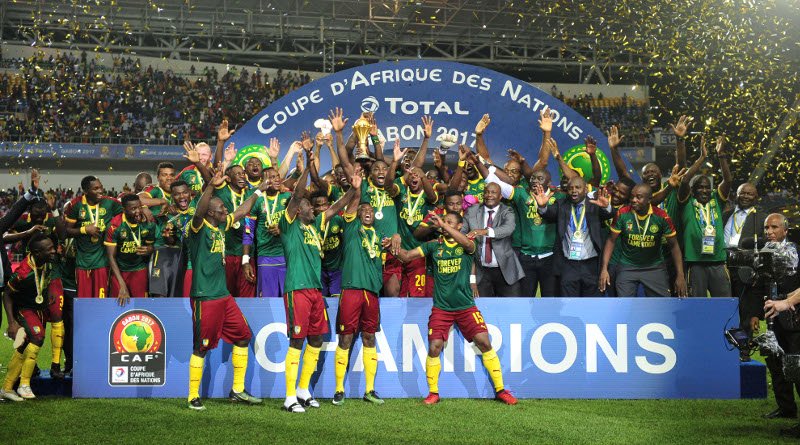
Yet the Indomitable Lions, captained by Benjamin Moukandjo, defied the odds, as though the gods themselves had cracked their palm kernels.
As tradition demands, they took the trophy to the Unity Palace, where President Biya and his wife gave them a hero’s welcome.
Like a true father, the President stepped back one year in time.
“Our national women’s football team, the Indomitable Lionesses, had raised the bar very high,” he said, before adding: “You were able to clear that bar.”
What bar?
The girls had played the Women’s Africa Cup of Nations final in Yaoundé in 2016. Although they lost 1–0 to Nigeria’s Super Falcons, the Lionesses had set the bar remarkably high for their male counterparts, especially considering what had happened to the men’s team over the previous eight years.
After losing the 2008 AFCON final to Egypt, the Indomitable Lions had fallen into a quagmire deep enough to threaten their glorious past.
In 2010, they suffered a quarterfinal exit—already a golden fall by what would follow. Then came the free fall. Two years later, they shocked the world by failing to qualify for the tournament. They returned in 2015, only to suffer a group-stage exit, an even greater blow to their already frustrated supporters. An insult!
This only added salt to a wound aggravated in 2014 by a World Cup campaign marred by disunity within the squad. A World Cup campaign without a single point. A World Cup campaign with just one consolation goal, scored by Joel Matip.
Those years were, in truth, as ugly as death. Many fans openly declared their preference for the girls, whose matches had previously attracted little attention.
But football fans have short memories. The surprise of 2017 quickly lured them back to the Lions.
A politician may wear a broad, seemingly innocent smile when facing the present, but his history books never leave his bedside.
And today, we are back to the script.
The Lions have not told us many tales capable of keeping sleep away from our eyes for a while now.
The last time they came close to making us proud again was in 2021, when they claimed bronze on home soil.
The 2023 tournament was not merely bad; it was shameful, ending with a round-of-16 defeat to Nigeria in Cote d’Ivoire.
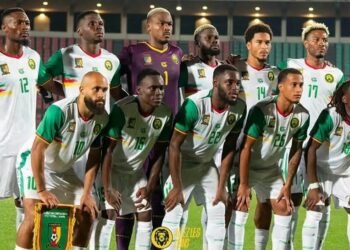
Despite reaching the quarterfinals in 2025, the Lions still sound like a drum beneath a rising sun. When the heat builds enough, our neighbours will know there is a big party coming.
And once again, the Lionesses have set the bar high by reaching another final of the ongoing Women’s Africa Cup of Nations in Morocco.
Then comes another intriguing coincidence.
The next AFCON year, like 2017, contains a seven: 2027. Can we, therefore, dare to say that 2027 is our year?
Perhaps football is not written by prophets. Perhaps it is written by players, coaches, preparation and a little bit of madness.
But before 2027 arrives, let us celebrate the Indomitable Lionesses, their coach, Valentine Nguele, and the other staff for once again setting a standard that makes the men’s team look toward another “prophetic” AFCON year.
Like in 2016, they have raised the bar, and the Lions know exactly what they have to clear.