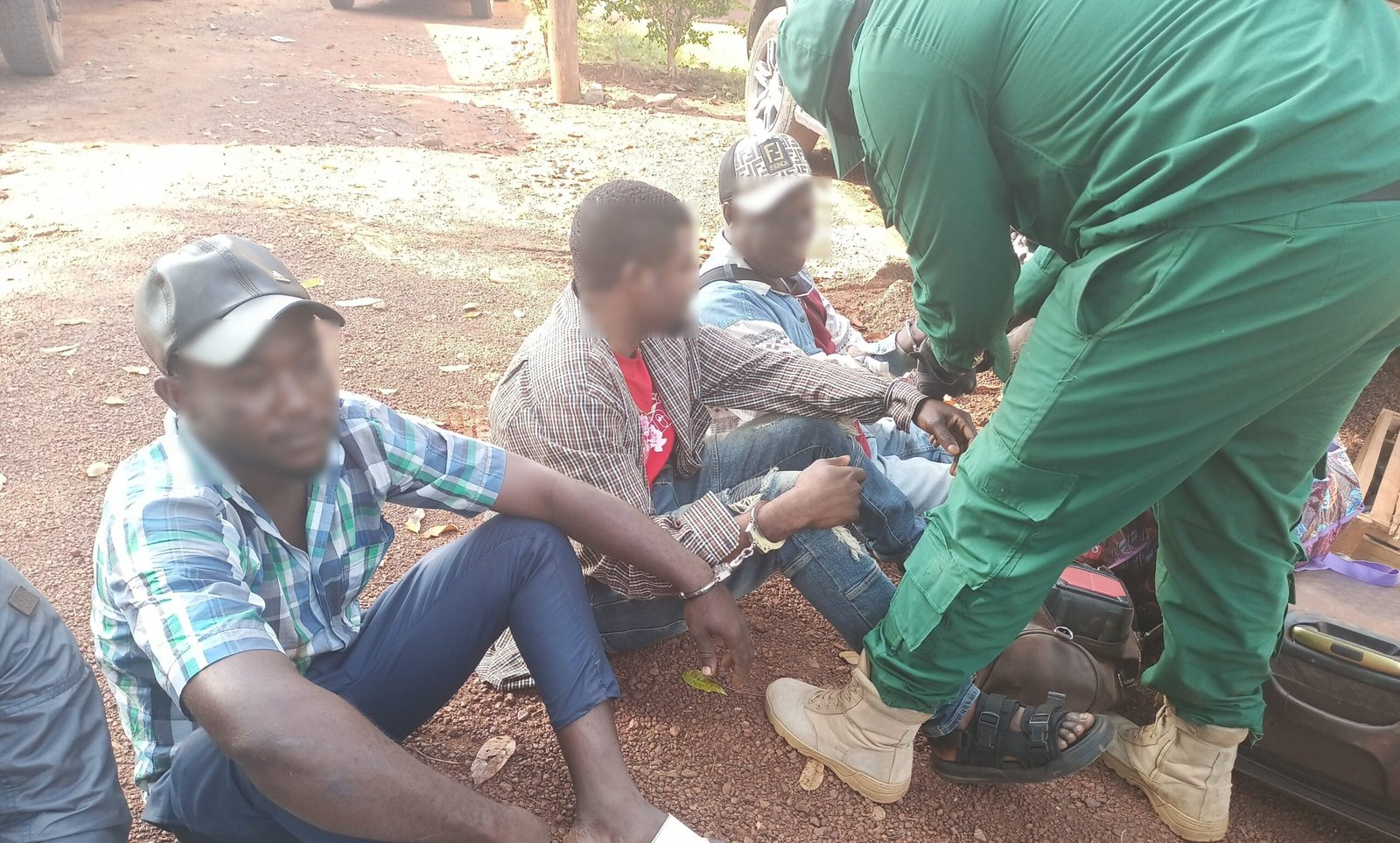
Eight wildlife traffickers were handed varying prison sentences in 2025 for engaging in the illegal trade of protected species, in a move authorities say underscores ongoing efforts to strengthen wildlife law enforcement.
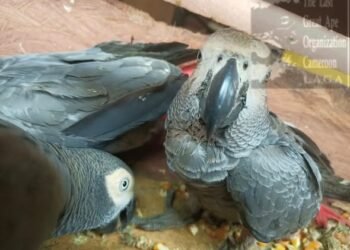
The convictions were secured under Cameroon’s 1994 wildlife law, which prescribes penalties of up to 10 years’ imprisonment for trafficking in protected fauna. In one of the cases, three traffickers were sentenced to six months in prison and fined FCFA 400,000 after being caught in possession of 28 African grey parrots in December 2022.
Officials say a new, more stringent law—providing penalties of up to 20 years’ imprisonment for offenders—is now in force, signaling a tougher stance against wildlife crime.

Section 173 of the 2024 Wildlife Law states that anyone found guilty of killing, possessing, or marketing protected wildlife shall be punished with imprisonment of 15 to 20 years, or a fine of FCFA 20,000,000 to 50,000,000, or both. This clearly classifies the offense as a criminal act, and therefore the procedures require that an examining judge handle the case, conservationists say.
Two of such cases, among others, are presently on the table of examining judges in Bertoua in the East Region and Yaounde in the Centre Region.
In Bertoua, three suspected traffickers are facing criminal charges for illegal possession of 64 African grey parrots, a species that is listed in Class A and totally protected. They were arrested last December.
In Yaounde, a suspected trafficker is standing trial for illegal possession of leopard skins. The suspect was arrest on December 17, 2025 while attempting to sell the skins of the totally protected animal.
Both arrests were carried out by the Ministry of Forestry and Wildlife, with the technical assistance of LAGA – a wildlife law enforcement support organization and if found guilty, the suspects risk prison terms of up to 20 years.
Wildlife protection officials say these measures aim to quickly reduce illegal wildlife trade, especially as the crimes evolve with new and more subtle tactics like the use of technology and money laundering. The Central African subregion is working to keep pace with these developments in wildlife crime.
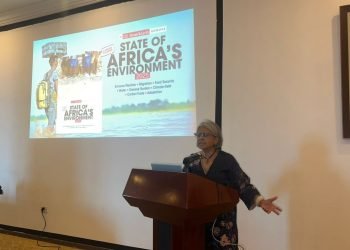
Conservation experts held a meeting in Douala recently to strengthen the application of the wildlife law. The meeting brought together experts from the government and NGO sectors to revise the Central Africa wildlife law enforcement action plan dubbed PAPECALF 2. The action plan seeks to strengthen the application of wildlife laws in the sub-region.
Speaking during the meeting, Luc Evouna, one of the experts from the World Wildlife Fund (WWF), said: “We believe that the action plan of the Central African Forests Commission (COMIFAC) member countries for the implementation of the wildlife law requires revision. This revision should address new forms of crime, particularly money laundering linked to wildlife trafficking and cybercrime in the context of wildlife trafficking”.
It is expected that with the revision of the law, more major wildlife traffickers will be arrested and tried under the 2024 Wildlife Law.