By Sylvester Atemnkeng (Doc Moore)*
One Thursday morning some months back in 2025, while on duty to cover a health-related story at the Maroua Regional Referral Hospital, I encountered a woman who unknowingly symbolized one of the growing dangers of the digital age. She was in her late forties. After exchanging greetings, I went about my assignment. On my way back, I noticed her leaving the hospital premises, her face heavy with sadness.
Curious, I asked why she looked so distressed. What followed was a chilling account of how social media had nearly cost her life.

It all began on TikTok, where she came across a woman from a neighbouring country advertising a “miracle” hair-growth product. The video promised fast results and showed convincing before-and-after images.
Motivated by curiosity and the desire to restore her hair, she ordered the product. What she received was a mixture of several unknown substances, poorly packaged and without any medical certification.
She applied the substance to her scalp and tied her head as instructed, leaving it on for two days. Soon after, unbearable pain set in. When she could no longer endure the agony, she removed the covering. What she saw was horrifying, her scalp had been severely burned, and large portions of her skin had peeled off.
Aisatou (not her real name) had fallen victim to a dangerous trend that is fast spreading across Africa and beyond: self-medication driven by unverified social media advice.
Her story is just the tip of the iceberg.
Social media turned into online clinics
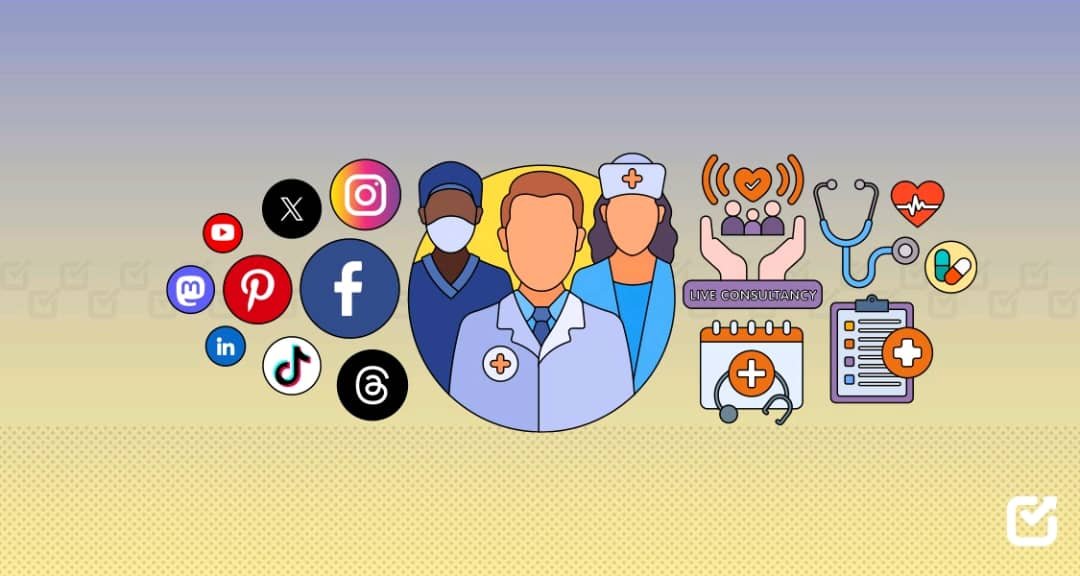
Facebook, TikTok, Instagram, X (formerly Twitter), WhatsApp groups, and other social media platforms have increasingly been transformed into unregulated online clinics. With little or no medical training, individuals create pages, gain followers, and begin advertising products claiming to cure everything from infertility to diabetes, from obesity to sexual weakness.
While a few people claim to have benefited from such products, many others have suffered irreversible damage and in some cases, lost their lives.
Ironically, the digital health space is not entirely bad. Across the world, licensed doctors and healthcare professionals are using social media responsibly to educate the public, fight misinformation, and build trust at a time when many patients turn to the internet before visiting a hospital.
However, alongside these professionals, quacks have infiltrated the system, exploiting public ignorance, desperation, and poverty.
Armed with smartphones, filters, and persuasive language, they sell hope, often deadly hope.
The problem is particularly common among young people. Products claiming to enhance breasts, buttocks, hips, or male sexual performance dominate online advertisements. Pills, creams, injections, and herbal mixtures are promoted without scientific backing or medical supervision.
The consequences range from hormonal imbalance and organ failure to permanent deformities and death.
Some media outlets have also contributed to the problem by copying social media trends and publishing them without proper verification. By failing to investigate the safety and authenticity of these products, such platforms unintentionally empower quacks and legitimize harmful practices.
Social media companies, content creators, regulators, and the media all share responsibility. Platforms must strengthen content monitoring, media houses must verify health information before publication, and the public must be encouraged to seek medical advice from certified professionals.
Healthcare is not entertainment. Likes, views, and followers should never come before human lives.
It is time for social media platforms to take health misinformation seriously by rigorously screening medical content. It is also time for the public to understand that not everyone in a white coat online is a doctor, and not every “testimony” is the truth.
Aisatou survived, many others have not. In an era where everyone can speak, wisdom lies in knowing whom to listen to.
*Sylvester Atemnkeng is a journalist with the Cameroon Radio Television (CRTV). He has over twelve years of experience in journalism and, before joining CRTV, he worked extensively the print media and several online platforms. He is passionate about writing on religion, politics, the economy, health, and public interest issues.